

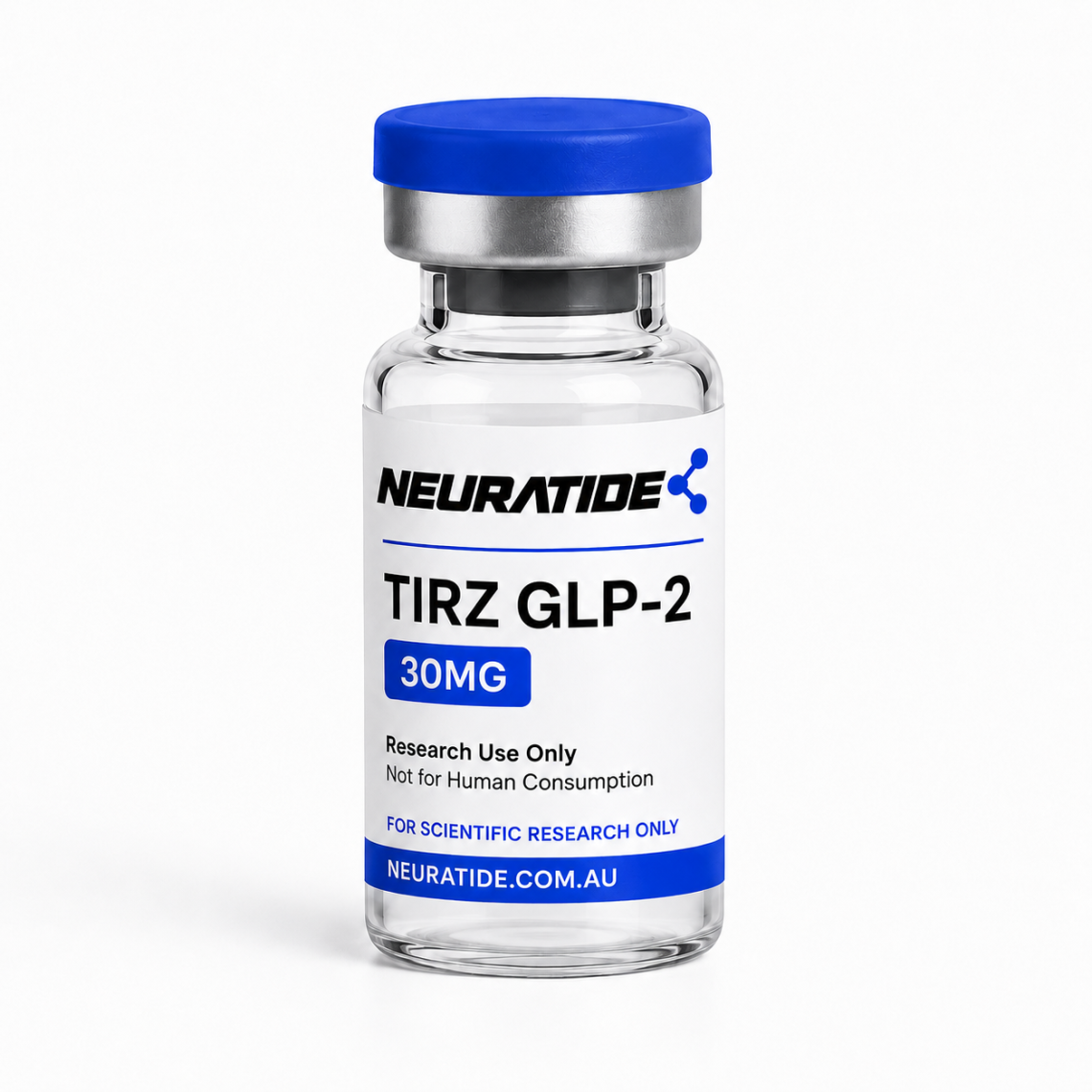
Description
What is Tirz GLP-2?
T-GLP-2 is a synthetic, long-acting peptide analog designed as a dual agonist of the GLP-1 (glucagon-like peptide-1) and GIP (gastric inhibitory polypeptide) receptors. This dual-agonist profile combines incretin-mimicking activity to enhance insulin secretion and regulate appetite—offering significant therapeutic potential for type 2 diabetes and adipose tissue management.
Structure of Chemicals iron peptides
Chemical Structure of Tirz GLP-2
Peptide Length: 39 amino acids, based on the GIP sequence, with modifications from GLP-1 and unique residues.
Non-standard Modifications:
Two α-aminoisobutyric acid (Aib) residues at positions 2 and 13, enhancing stability and prolonging half-life.
A C-terminal amidation and position-20 lysine side chain acylated with a C20 fatty diacid moiety via γ-Glu and bis-(aminoethoxy) linkers, increasing albumin binding and enabling once-weekly dosing
Molecular Formula: C₂₂₅H₃₄₈N₄₈O₆₈
Molecular Weight: Approximately 4,813.45 Da
What Are the Effects of Tirz GLP-2?
Pharmacology & Mechanistic Overview
This compound is studied as a dual agonist of GLP-1 and GIP receptor pathways, exhibiting greater relative affinity for the GIP receptor while maintaining measurable GLP-1 receptor activity. Research focuses on how simultaneous incretin pathway engagement influences metabolic signaling networks in controlled experimental models.
Mechanistic Research Findings
Incretin Signaling Modulation
Investigated for its role in co-activation of GLP-1 and GIP–associated signaling cascades, with studies examining downstream effects on glucose-related and energy-balance pathways.
Adipose-Related Signaling Pathways
Explored in research models for associations with adipocyte signaling, lipid metabolism regulation, and energy storage dynamics, without reference to clinical outcomes.
Glycemic Regulation Mechanisms
Studied for involvement in insulin-responsive signaling pathways, glucagon modulation mechanisms, and pancreatic β-cell signaling, as observed in laboratory and preclinical settings.
Pharmacokinetic Properties
Characterized for its fatty-acid modification and albumin-binding behavior, which are examined for their influence on molecular stability, receptor exposure duration, and circulation persistence in experimental analyses.
Research Context & Implications
Often described in the literature as a “twincretin” research compound, this dual-pathway design is explored for how multi-receptor engagement may alter metabolic signaling efficiency compared to single-receptor investigational agents.
Its structure and receptor profile are contributing to ongoing research into multi-pathway endocrine signaling models, informing broader scientific discussions around complex metabolic system modulation.




Abbie (verified owner) –
Looks good
Dennis (verified owner) –
Arrived on time, will order again